Your cart is empty.
Shop peptides
How Long Do Peptides Last?
Storage guide
How long do peptides last?
The short answer, the long answer, and how to keep research peptides stable in powder form and after reconstitution.
Updated September 2026 · 6 min read · Prime Peptides lab team
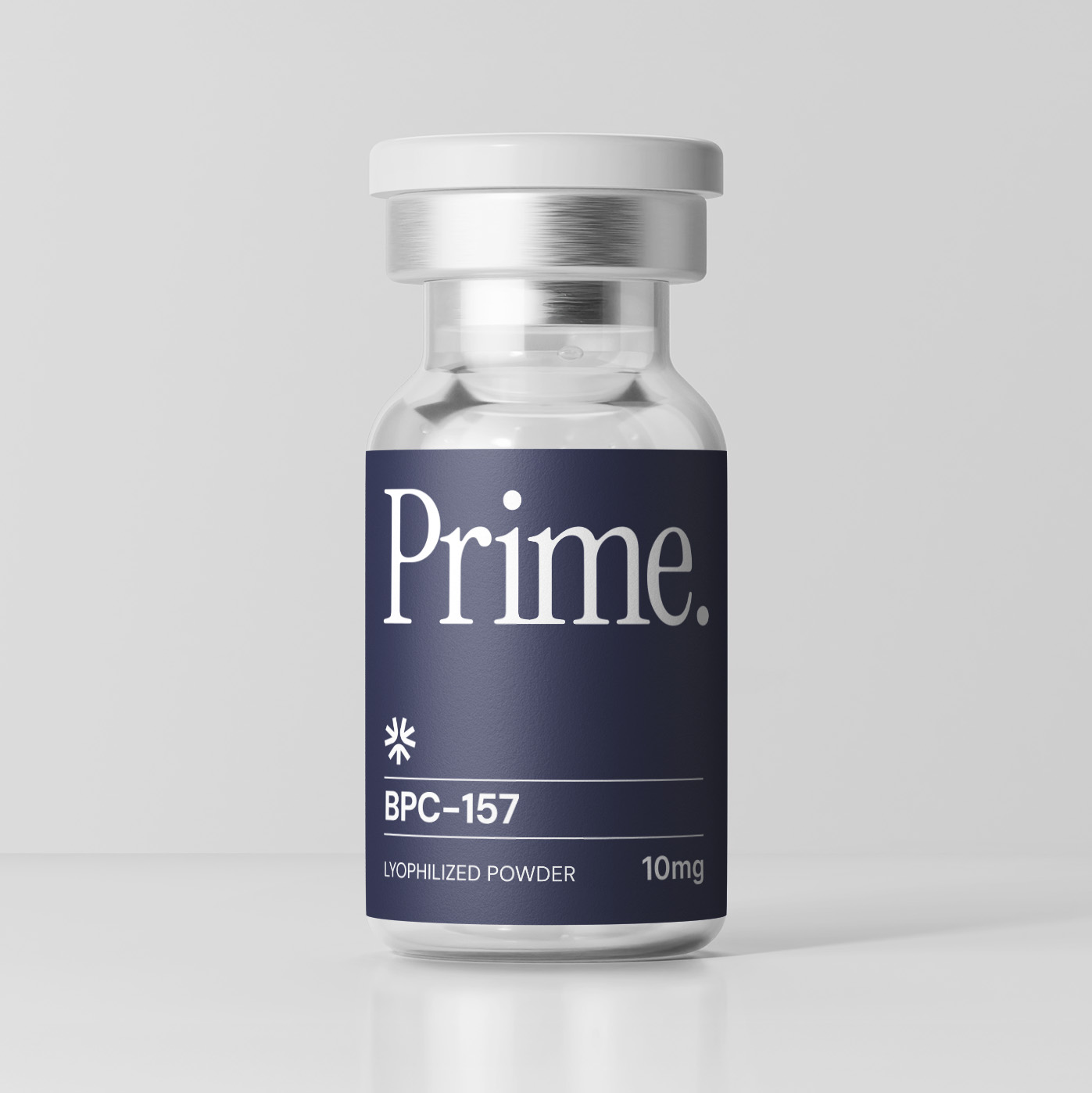
Powder, refrigerated
1 to 2 years
Powder, freezer
2 to 3+ years
Reconstituted
about 4 weeks

The short answer
Lyophilized (powdered) peptides last 1 to 2 years in the fridge and about 6 to 12 months at room temperature when sealed and kept dark. Once reconstituted with bacteriostatic water, most peptides stay stable for about 4 weeks refrigerated, up to 8 weeks for hardier ones. Sealed powder in the freezer can last 2 to 3 years or more.
Shelf life by storage method
Same vial, five very different clocks.
The bars are drawn to scale in months. Notice how small the reconstituted bars are next to the powder bars. That gap is the whole story of peptide storage.
Powder, freezer
−20 °C / −4 °F, sealed
2 to 3+ yrs
Powder, fridge
2 to 8 °C / 36 to 46 °F
1 to 2 yrs
Powder, room temp
20 to 25 °C, dark and sealed
6 to 12 mo
Reconstituted, fridge
Mixed with BAC water
4 to 8 wks
Reconstituted, room temp
Left on the bench
Days
0
1 year
2 years
3 years
Powder, typical
Reconstituted, typical
Upper range under ideal conditions
Ranges are typical for research peptides stored as directed. Individual peptides vary with their sequence, and a published lab report for the specific lot is the only way to know its purity on a given day.
Powder vs. liquid
Why the clock speeds up the moment you add water.
A peptide is a short chain of amino acids. Chains like that are fragile. Water, heat, light and air each give the chain a way to come apart, and water is the big one.
Lyophilized powder
No water, no problem.
Freeze-drying pulls almost all the water out of the vial. Without water, hydrolysis can’t happen and the reactions that would chew up the chain go quiet. That is why a sealed vial of powder can sit in a fridge for a year or two and test the way it did on day one.
Reconstituted solution
Water is back. So is the clock.
Add bacteriostatic water and the peptide is in solution again. Each time the vial is opened a little air gets in, and the liquid is now something bacteria could grow in. The 0.9% benzyl alcohol in BAC water holds bacteria off for a few weeks, which is where the four-week rule comes from. To pick a vial size you can finish in that window, the peptide calculator shows how many draws a vial holds and when it runs out.
Where to keep it
Cold, dark, steady. In that order.
Here is where each temperature lands, and what belongs there.
−25 °C
0 °C
20 °C
45 °C
Freezer
−20 °C
−4 °F
For sealed powder you won’t touch for months. Skip it for reconstituted vials unless they can stay frozen. Every thaw costs something.
Fridge
2 to 8 °C
36 to 46 °F
The default for everything. Powder keeps up to two years here, reconstituted vials about four weeks. Back shelf, not the door.
Room temp
20 to 25 °C
68 to 77 °F
Fine for sealed powder in transit or on a bench for a few days. Not a home for a reconstituted vial.
Avoid
40 °C+
104 °F+
A parked car, a sunny windowsill, a porch in July. Heat this high starts breaking bonds in hours, not weeks.
BACK SHELF
DOOR
Back shelf, not the door.
The door is the warmest and least stable spot in the fridge. Every time it opens, whatever lives there takes a small temperature swing, and repeated swings do more damage than a steady cool.
Keep vials in their box or a small container at the back of a middle shelf, away from the light and the vegetable drawer’s humidity.
What breaks peptides down
Four things a peptide never wants to meet.
Every storage rule on this page comes back to one of these four. Manage them and the numbers in the chart hold up.
Enemy one
Heat
Warmth speeds up every reaction in the vial, including the ones you don’t want. Temperature swings are worse than a steady cool.
DO
Keep it cold and keep it steady.
Enemy two
Light
UV light breaks peptide bonds directly. Sunlight through a window counts. A bright lab bench counts less, but still counts over weeks.
DO
Keep the vial in its box or a drawer. Dark beats amber glass.
Enemy three
Moisture
Water is what lets hydrolysis happen. A cold vial opened in warm air pulls condensation straight into the powder.
DO
Let a cold vial reach room temperature before you open it. Keep powder sealed.
Enemy four
Air
Oxygen oxidizes certain amino acids, and shaking whips air into a solution while stressing the chain.
DO
Keep the cap on. Swirl, never shake. Don’t leave a reconstituted vial open.
Signs it went bad
What a good vial looks like, and what a tired one looks like.
You can’t see purity, but you can see the obvious problems. Hold the vial up to a plain light and compare.
Good powder
A white or off-white cake or fluffy powder, dry and intact.
Tired powder
Yellowed, shrunk into a glassy lump, or looks melted. Heat or moisture got in.
Good solution
Clear and colorless, like water. No haze, no floaters.
Tired solution
Cloudy, specks or particles, or a color shift. Set it aside.
What you can’t see is potency. A vial can look perfect and still have lost part of its purity. That’s why every Prime lot is tested by an independent lab before it ships, and the results are published.
See lab results The porch question
It sat outside all afternoon. Is it ruined?
Almost certainly not. Lyophilized peptides are tougher than the internet makes them sound. A day or two of warm shipping is well inside what a sealed vial of powder handles, and the shelf-life numbers above assume a cool, dark home for the long stretch, not a perfect one every hour.
Get it into the fridge, keep it out of the sun, and carry on. A reconstituted vial left warm overnight is a different matter. Treat that one with suspicion.
Storage checklist
Store it like a lab would.

Powder lives in the fridge, sealed, in its box, at the back of a shelf.
Write the reconstitution date on the vial. Four weeks from that date is the rule.
Let a cold vial warm to room temperature before opening it.
Swirl to dissolve. Never shake.
Use bacteriostatic water for any vial that will be opened more than once.
Freeze sealed powder only for long-term storage, and don’t cycle it in and out.
FAQ
Questions people ask before they open the fridge.
How long do peptides last in the fridge?
Lyophilized powder keeps for one to two years in the fridge at 2 to 8 °C. Reconstituted peptides keep for about four weeks, sometimes up to eight for more stable sequences.
How long do reconstituted peptides last?
Plan on four weeks in the fridge once mixed with bacteriostatic water. Some peptides hold up for six to eight weeks, but four is the safe rule. At room temperature, count in days.
How long do peptides last at room temperature?
Sealed lyophilized powder is fine at room temperature for weeks, and typically for six to twelve months if it’s kept dark and dry. A reconstituted vial should not live at room temperature at all.
Can you freeze peptides?
Sealed powder, yes. Freezing at −20 °C extends shelf life to two or three years or more. Reconstituted solution is riskier: ice crystals stress the peptide, and each freeze-thaw cycle costs some activity. If you must freeze a solution, split it into single-use portions so nothing gets thawed twice.
Does it matter which water I use?
Yes. Bacteriostatic water contains 0.9% benzyl alcohol, which slows bacterial growth and is what makes a four-week window possible for a vial that gets opened repeatedly. Sterile water has no preservative, so anything mixed with it should be used promptly.
Do peptides expire?
They degrade rather than expire on a fixed day. Purity drifts down as time, heat, light and moisture add up, which is why storage matters more than the date on the label. The lab report for your lot tells you where it started.
How do I know if a peptide has gone bad?
Look for cloudiness, particles or a color change in a solution, and for yellowing, clumping or a melted look in powder. If it looks wrong, set it aside. If it looks fine but has been stored badly for a long time, assume purity has slipped even though you can’t see it.
Keep going
Useful next.
Tool
Reconstitution calculator
Work out how much bacteriostatic water to add for the concentration you want.
Shop
Bacteriostatic water
The preservative-grade water that makes the four-week window possible.
Proof
Lab results by lot
Third-party purity reports for every Prime batch, published for anyone to check.
Research use only. All Prime Peptides products are for laboratory research purposes only. Not for human consumption, medical, or veterinary use. The buyer is responsible for adhering to all local laws and regulations. Prime Peptides is not a pharmacy and does not provide medical advice.